
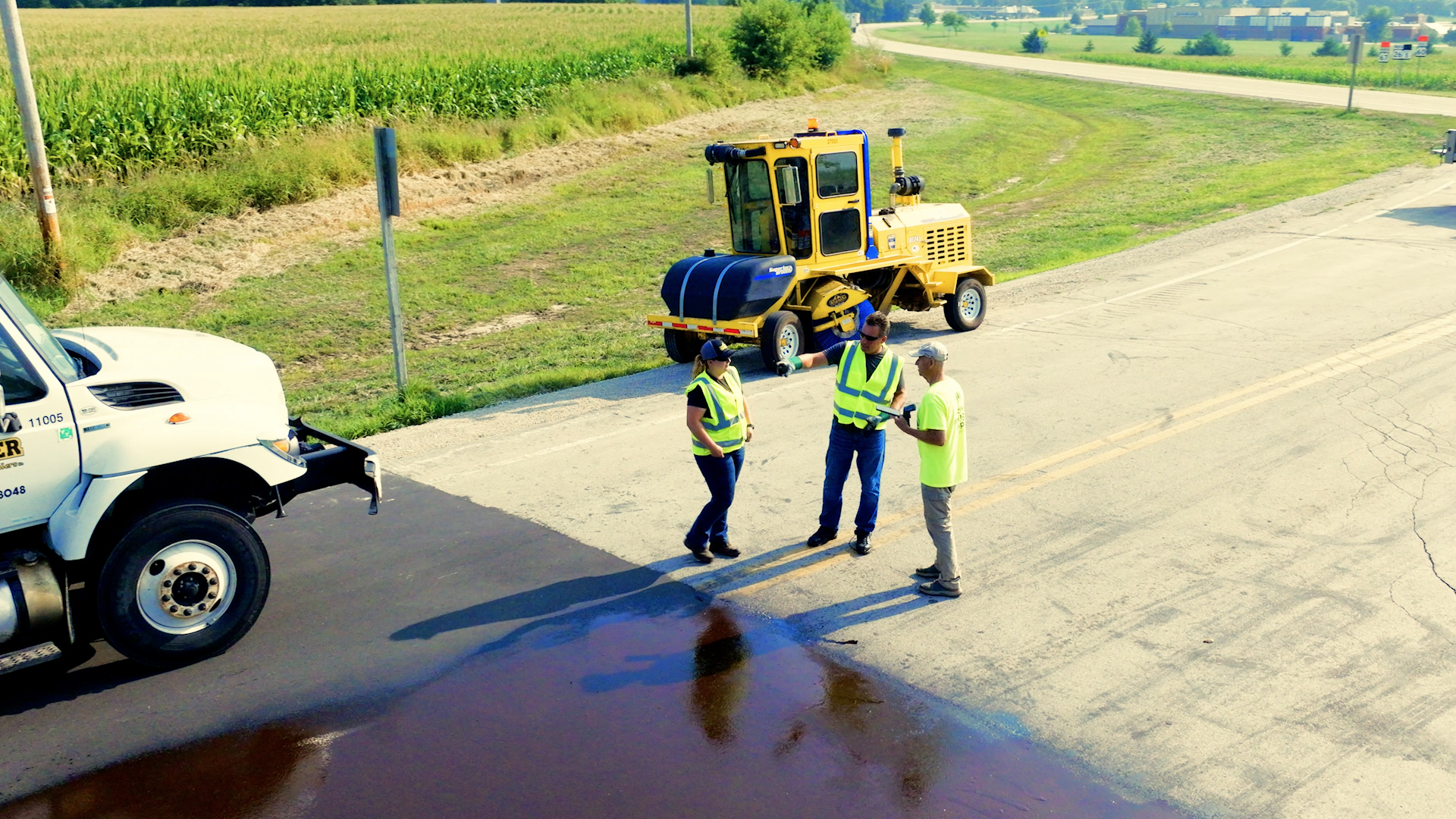
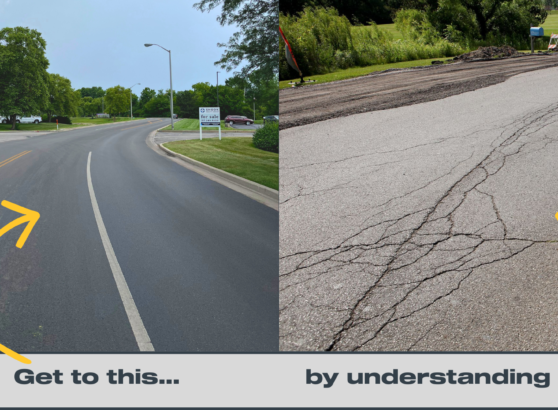
Pavements rarely decline from well-maintained to failing in performance overnight. They tend to deteriorate gradually through small cracks, small deformations, moisture intrusion and surface aging that can go unnoticed until the damage is unmistakable. Across the industry, this pattern raises a larger question: why wait to preserve pavements until deterioration is visible, costly and disruptive?
Asphalt Materials, Inc. (AMI) understands that preservation succeeds when road maintenance goes beyond individual projects and toward the long-term health of the entire network. That perspective is increasingly shared by leaders in pavement research and education, including Professor Andrew Braham, a recognized civil engineering educator at the University of Arkansas.
“Pavement preservation isn’t just applying a treatment,” Braham says. “It’s a concept. It’s looking at the health of the entire pavement network and managing treatments to keep all roads in good or very good condition.” This very philosophy is at the heart of his work as an asphalt educator, researcher and industry trainer.
In a recent conversation with AMI, Professor Braham expanded on how this type of system‑level thinking is often missing in day‑to‑day pavement decision‑making and why education plays such a critical role in bridging that gap.
Pavement Preservation as Resource Stewardship
Braham frames pavement preservation as a proactive commitment to care for infrastructure while it is still performing well. He gives a simple analogy of water damage appearing on a ceiling; no one waits until the roof collapses to act. “So why do we wait until we can see the sky before fixing our roads?” He asks.
He advocates looking holistically at an entire road network and creating a long-term strategy to preserve those pavements, rather than only looking at one road at a time with a short-term project-by-project view. This is largely driven by his research, which consistently shows that less intensive preservation treatments earlier in a road’s life cost less over time than major rehabilitation near the end of a road’s life.
This “lifecycle thinking”, evaluating pavements not by initial cost or appearance, but by how long they perform and what it takes to keep them performing, is central to Braham’s teaching. This approach conserves public funds, reduces disruptions and minimizes environmental and social impacts across the network.
Intentionally Choosing Materials
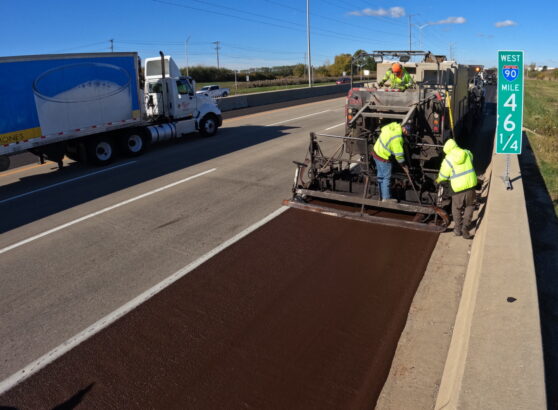
Material choice plays a central role in whether preservation strategies succeed. Braham emphasizes that durability is not accidental; it is engineered through thoughtful material selection and placement.
Materials influence roughness, durability and maintenance needs — all conditions that directly affect vehicle fuel consumption, emissions and user experience. So, while they need to be thoughtfully considered, they are only one piece of the puzzle.
He points to concepts like perpetual pavements, where specific asphalt mixtures are intentionally designed for certain layers: fatigue-resistant materials at the bottom and highly durable surfaces at the top. These designs are only possible when agency departments come together to build this type of long-lasting pavement. First, there needs to be a shared understanding that the opportunity to build long-lasting roads exists, then there needs to be a coming together of departments to design and build those types of roads, and finally, the recognition to take care of the surface of the road in order to protect the high-value structure.
Education as the Missing Link
If materials are the tools of preservation, education determines how they are used and whether they are used effectively. Braham has seen a gap in pavement preservation education at all levels and is on a mission to make knowledge about asphalt, and the preservation of it more accessible.
“In a four‑year civil engineering program, asphalt gets minimal attention despite it being a part of our everyday experience,” he explains. “It’s a niche area, compared to concrete and steel; contact time is limited in the classroom.”
Engineers and industry professionals need greater exposure to asphalt materials and construction practices to build longer-lasting roads. To support this, Braham has partnered with industry leaders to develop trainings for Asphalt Emulsion Manufacturers Association (AEMA) and Asphalt Institute Foundation and other industry organizations. He also contributes to a YouTube “Pavinar” webinar series through the University of Arkansas and guides his students and professionals to RoadResource.org to learn about pavement treatments, play with lifecycle and remaining service life cost calculators and see how others are achieving a preservation-first approach.
Launching this fall is an even more robust opportunity for professionals who could benefit from a deeper dive into pavement design and maintenance – an online Master of Science in Pavement Technology through the University of Arkansas. The program is designed for engineers, chemists, managers and others who work in pavements but may not have formal pavement education. “This online program will be helpful for individuals who want to have a more holistic understanding of road design and preservation,” Braham said. “We’ve seen an interest from many people who work for private companies and for DOTs, but also people who are in adjacent roles.”
Through education, individuals will gain more than just tactical knowledge and strategic insights, they’ll be better prepared for conversations that bridge departments and grow adoption of practical ways to build stronger, longer lasting and less expensive roads.
From Classroom to Roadway: A More Enduring Future for Pavements
When it comes to preservation, the most important shift is not just technical, but conceptual. Effective preservation works when decisions are made early and guided by lifecycle performance, and earning support from engineers, agencies and industry partners alike. Researchers like Professor Andrew Braham help advance that understanding by equipping students and professionals with the educational foundation that encourages better conversations and better outcomes on real roadways. Rather than any single technology or treatment, Braham’s optimism comes from the people engaged in advancing preservation, like students discovering lifecycle thinking for the first time and professionals gathering at workshops and committees to challenge the status quo.
“We’re all fighting the same fight,” he says. “Just in different ways.”
By teaching engineers to understand materials as resources, think in networks rather than projects, and to value early action over late reaction, Braham is helping communities build pavements that last longer.
Education, from this perspective, is the most sustainable investment in our infrastructure we can make.
If you’re interested in developing a stronger pavement preservation plan, and want to understand your material options, reach out to our team for insight on specific treatments and ideas on proactive approaches.


































































Recent Comments