Throughout the year, our Heritage family will collect items for the communities we work and live in that are in need. In September, we collected more than 12,020 essential items for victims and survivors of domestic violence across the country.
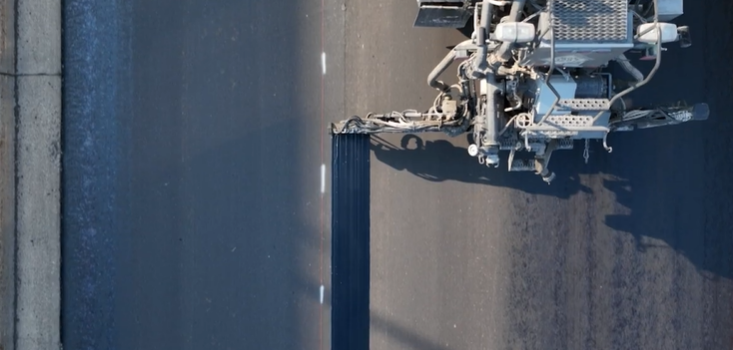
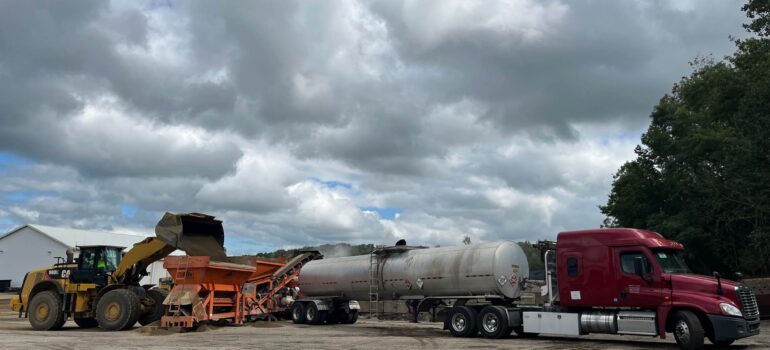
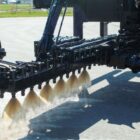
A Void Reducing Asphalt Membrane, (VRAM), project took place on August 3rd & 8th in Hennepin County, Minnesota. This was a Minnesota Department of Transportation (MnDOT) project.
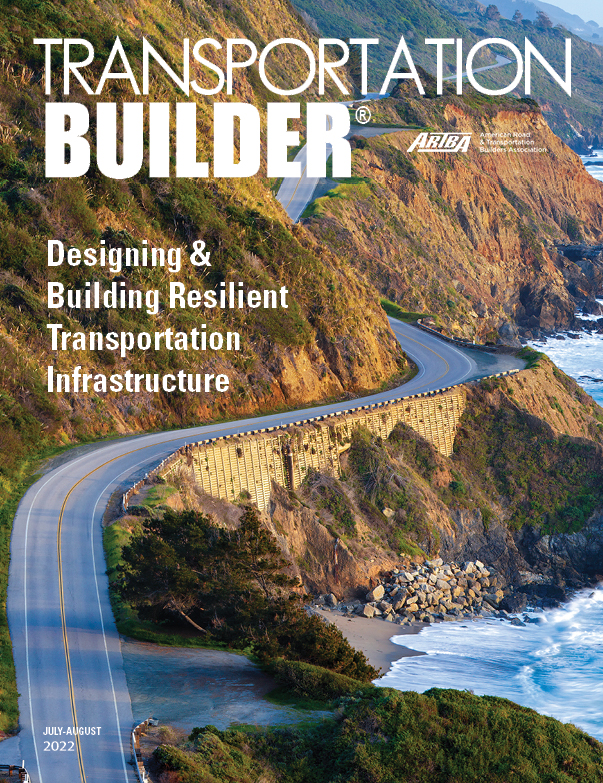
Excerpt from the JULY – AUGUST 2022 Edition of TRANSPORTATION BUILDER Magazine from ARTBA, The American Road & Transportation Builders Association
CHAIRMAN’S CORNER – by WARD NYE | Chairman & CEO, Martin Marietta
Building Resilient Transportation Infrastructure Requires Investment, Innovation & Collaboration
“At the federal level, the Infrastructure Investment and Jobs Act (IIJA) has established both a formula and a discretionary program aimed at rewarding states that enhance the resiliency of transportation infrastructure and make plans for future investment.
At the federal level, the Infrastructure Investment and Jobs Act (IIJA) has established both a formula and discretionary program aimed at rewarding states that enhance the resiliency of transportation infrastructure and make plans for future investment.
As chronicled in the pages of this issue, stories of our industry’s endeavors to incorporate resiliency into transportation improvements abound. For example, building information modeling (BIM) helped replace the aging East 138th Street Bridge (known by many as the Madison Avenue Bridge) in New York City, making the city’s transportation grid more resilient. Learning from past weather events, highway engineers in Florida have constructed a 2.4-mile stretch of highway on the state’s east coast designed to be more resilient in the wake of future storms.
Scan the QR Code to visit the ARTBA Site.
To read the full article in the AUGUST 2022 Edition of TRANSPORTATION BUILDER follow the link below.
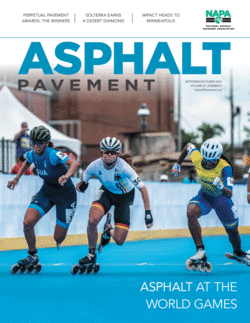
Excerpt of October 2022 Article Featured in Asphalt Pavement Magazine
BY BENJAMIN F. BOWERS, PE
ASSISTANT PROFESSOR, AUBURN UNIVERSITY
Volume 27 | Number 5
“The three tenants of sustainability are people (social), planet (environmental concerns), and the oft-forgotten profit. As a graduate student, I lounged one evening on my porch after a day of pounding out proctor samples in the lab, sipping on a craft beer (my millennial is showing), and reading the book ‘Cradle to Cradle’ by architect William McDonough and chemist Michael Braungart.
That book changed my career trajectory. One of my biggest takeaways was that I could do everything in the world for people and the environment; but if I didn’t make a profit, I would go out of business. That’s not sustainable.
RAP is a great example of cradle-to-cradle. Old binder is binder; old aggregate is aggregate. Asphalt pavement is used as asphalt pavement. How do we, the asphalt pavement industry, leverage sustainability (do good for our neighbors and our world) to also make a profit?”
Read more from the September / October issue of Asphalt Pavement Magazine by scanning the QR Code.
Footnote: Reclaimed asphalt pavement (RAP) is the term given to removed and/or reprocessed pavement materials containing asphalt and aggregates. These materials are generated when asphalt pavements are removed for reconstruction, resurfacing, or to obtain access to buried utilities. When properly crushed and screened, RAP consists of high-quality, well-graded aggregates coated by asphalt cement.
Let’s take a look behind the scenes into the pavement problems, what options were considered, and why recycling was the clear answer for Dundee High School pavement project in Monroe County, Michigan.
Pavement preservation is a cost-effective and environmentally friendly way to extend the life of roadways which helps public funding go further. A pavement preservation strategy is proven to produce fewer greenhouse gas emissions, expend less energy, and give faster application times than the alternative conventional approach, in addition to being cost-effective.
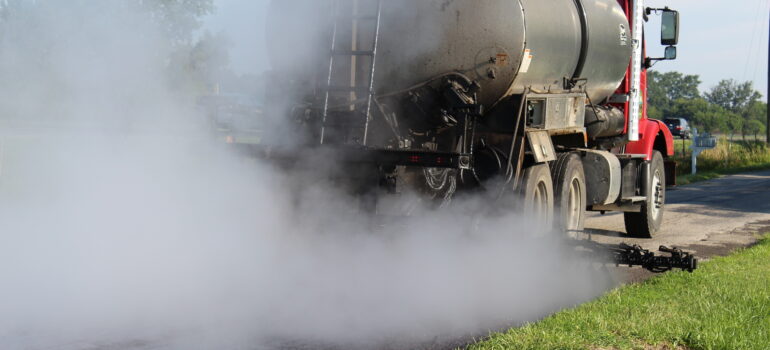
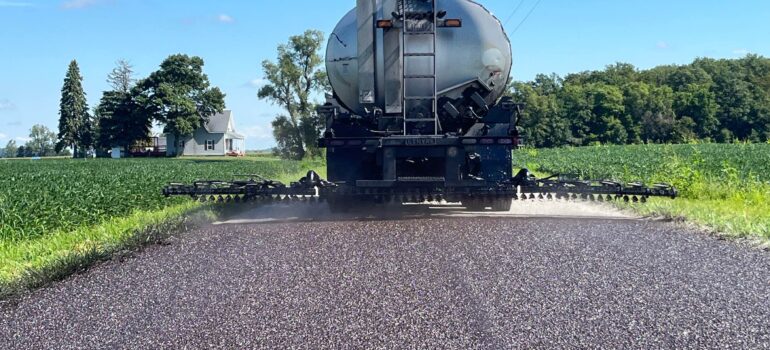
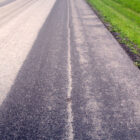
On August 18th, a Chip Seal project took place in Gaston, Indiana. This project was completed by the Delaware County Highway Department. Chip seals are used to prevent water intrusion into a pavement and create a high friction surface for safety. Chip seal emulsions can be polymer modified to improve aggregate retention and provide for a quicker return to traffic.
Improving the resilience of infrastructure helps advance a more sustainable transportation network.
Pavement preservation is a more cost-effective and environmentally friendly way to extend the life of your roadways and make public funding go further. A pavement preservation strategy is proven to produce fewer greenhouse gas emissions, expend less energy, and give faster application times than the alternative conventional approach, in addition to being cost-effective.
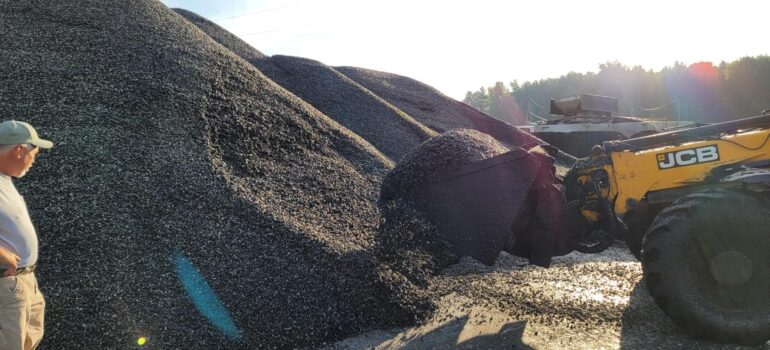
Cold Constructed Asphalt Pavement (CCAP®) is a cold mix asphalt that is created by combining aggregate and a chemically modified asphalt and mixing the two ingredients at ambient temperature. The cold mix may be stockpiled for weeks to a few months and then placed using a paver for road repair such as patching potholes or adding a new layer to low-volume roads. A chip seal is often placed over the cold mix.
Chip seals are an application of asphalt emulsion or chemically modified asphalt, followed by a layer of aggregate which is rolled and embedded into the emulsified asphalt. The process may be repeated to create a double or triple chip seal.











Recent Comments