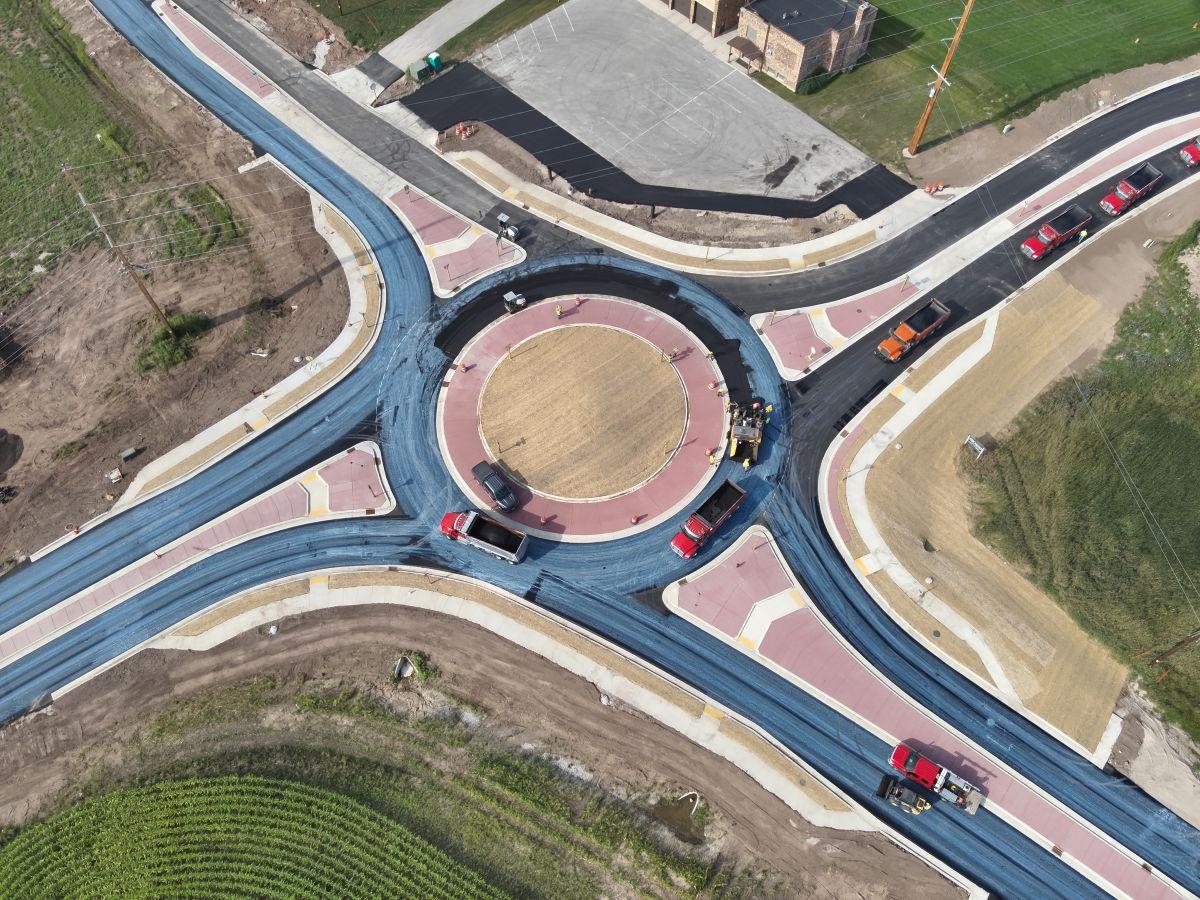
A strong bond between pavement layers is essential to long-term performance. Enhanced lift bonding can improve road durability and reduce the potential for distresses like slippage, shoving, delamination and longitudinal wheel path cracking in demanding traffic environments.
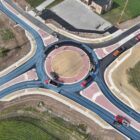
To help address the demands of a new roundabout in Sheboygan Falls, Wisconsin, Asphalt Materials, Inc. (AMI) worked with the Sheboygan County Highway Department to implement its AMIBOND™ T-Bond® hot-applied polymer-modified tack coat system.
Roundabouts: The Safety Strategy Reshaping Local Intersections
Roundabouts have become an increasingly common solution for transportation agencies looking to improve intersection safety and traffic operations. Designed to reduce head-on collisions while maintaining continuous traffic flow at lower speeds, modern roundabouts began appearing across the United States in the late 1990s. Adoption has continued to accelerate as they have shown to decrease fatal and severe injury crashes by 82% and become a FWHA Proven Safety Countermeasure.
With roundabout growth in the last decade of over 180%, the construction and durability of these relatively new U.S. intersections are becoming an important topic for counties, municipalities and state transportation agencies and their communities.
For Sheboygan Falls, an intersection with historically high rate of crashes, the county chose a roundabout design in part to address it. But with growing industry in the area, a significant increase in truck traffic over the next several years is expected. These roads need to keep a high level of service under heavier and less predictable future use, which is why the county was exploring ways to increase durability.
Why Strong Pavement Bond Matters for Roundabouts
While roundabouts improve safety and efficiency, they also create higher demand for pavement performance. A roundabout concentrates turning, braking and accelerating traffic into a small footprint. Those shear forces act right at the interface between the surface course and the lift below. If the tack coat is thin or poorly bonded, the surface can shove, slip or delaminate prematurely.
Not limited to roundabouts, AMI has helped agencies identify and remediate pavement bond failures on other roadway projects, particularly those involving challenging grades and heavy traffic volumes. With the Sheboygan Falls project, project leaders recognized early that achieving a strong bond between asphalt lifts would be critical to long-term performance under expected traffic loads. Working with AMI, the team was able to determine a strategy designed to maximize interlayer bonding and pavement durability.
Building a Better Bond with Polymer Modified Asphalt Binder
PMAB is a heavily polymer-modified binder that grades as a PG 88-28. Sprayed hot at a higher rate than a conventional emulsion tack, it leaves more residual asphalt at the interface and a tougher, more elastic bond between the new surface and the lift below it. The result is a more durable bond between asphalt lifts, enabling better resistance to slippage, shoving, premature delamination and longitudinal wheel path cracking.
PMAB brings three advantages to the interface:
- More residual binder. PMAB is sprayed as 100% binder at 0.125 to 0.20 gal/SY for bonding, far more residue than a typical Wisconsin emulsion tack at .025 gal/SY.
- A more resilient bond. A high polymer content (PG 88-28, 70% minimum elastic recovery) keeps the bond flexible under repeated shear.
- Lower permeability. The heavier binder film seals the underlying lift against water and can add crack resistance. On SR-26 in Jay County, Indiana, a lane tacked with VRAM at 0.15 gal/SY had 9% longitudinal cracking after eight years, versus 50% in the conventionally tacked lane beside it.
How the T-Bond System Works
T-Bond PMAB is sprayed at approximately 300 to 330°F with a distributor that has a full-width spray bar, then cools quickly on the pavement. A potential challenge with PMAB, particularly on warm days or when a milled substrate is present, can be pick up on construction vehicle tires before paving. To reduce the probability of pickup, Anti-Tracking Solution (ATS) can be used.
ATS is a water-based product sprayed cold over the PMAB at about 0.1 gal/SY. As it dries, it turns white and leaves a very fine particulate film. That film acts as a bond breaker between tires and the binder, but it does not interfere with the bond between the PMAB and the hot mix placed on top. With ATS in place, haul trucks, material transfer vehicles and pavers can drive on the tack without picking it up, even on milled surfaces.
The project followed the AMI specification guideline for T-Bond. Key requirements include:
- PMAB rate of 0.125 to 0.30 gal/SY (±10%), with at least 95% coverage
- ATS rate of 0.07 to 0.13 gal/SY, with the spray starting before the vehicle’s tires reach the PMAB
- A clean, dry surface, with surface and air temperatures of at least 40°F and rising
- PMAB applied in a single pass at no more than 330°F
Project Overview
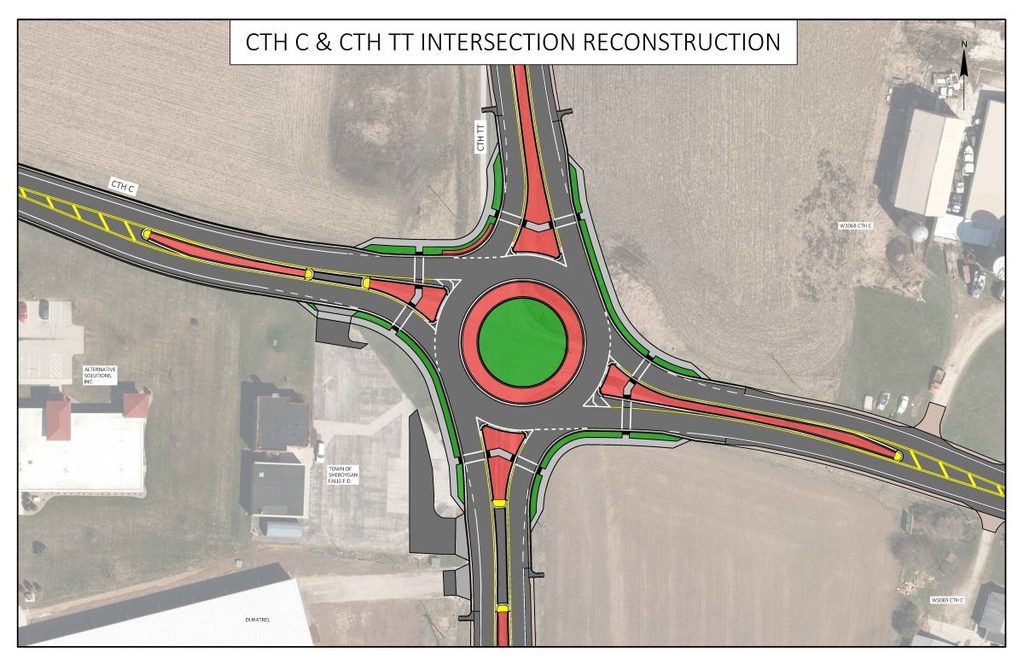
The new roundabout sits at the intersection of County Trunk Highway C (CTH C) and County Trunk Highway TT (CTH TT) in Sheboygan Falls (map). PMAB was placed on a freshly paved intermediate lift, directly beneath the 2-inch surface course.
| Item | Detail |
| Agency | Sheboygan County Highway Department |
| Application Date | August 18, 2026 |
| Applicator | Evergreen Roadworks™ |
| Treated area | The roundabout plus the CTH C and CTH TT approach legs |
| Target PMAB rate | 0.15 gal/SY |
| Underlying layer | New intermediate HMA lift |
| Surface mix | WisDOT 4LT (12.5 mm NMAS, fine graded), 2 in. compacted |
| Technical support | Asphalt Materials, Inc. |
Construction Process
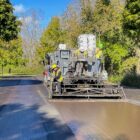
Evergreen Roadworks began spraying T-Bond PMAB at 6:00 a.m., tracing the interior of the roundabout first and then the outer circumference. Conditions were mild: 73°F surface, 63°F air, 83% humidity and a 6 mph wind. The target rate was 0.15 gal/SY.
The binder cooled to 80°F in under a minute. Within that minute, a passenger van drove across the fresh PMAB without tracking any material.
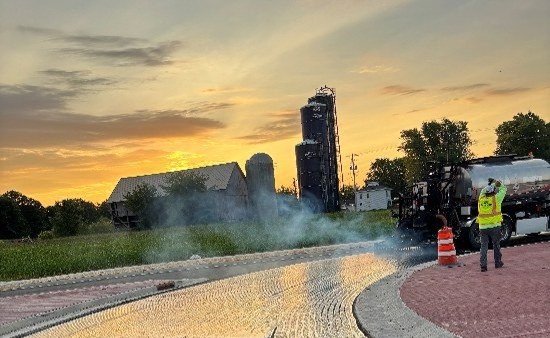
ATS followed around the roundabout at 0.05 gal/SY. That is below the specification’s recommended 0.07 gal/SY minimum. Observations under initial traffic showed the lighter rate was sufficient for this job.
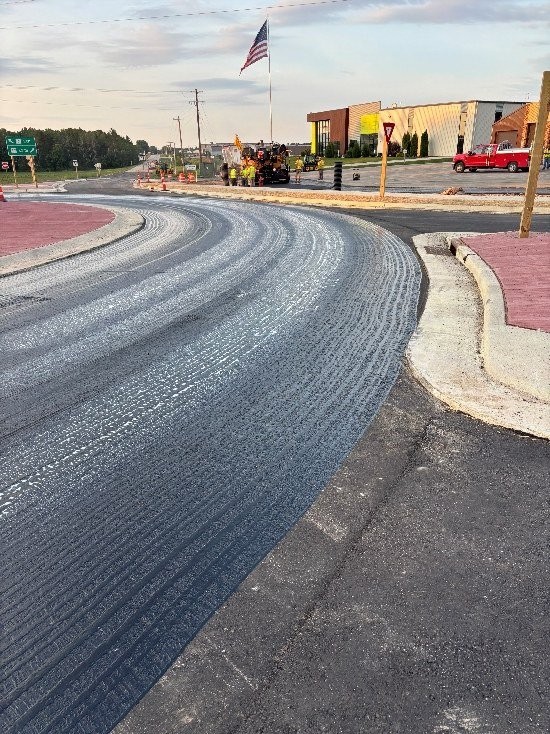
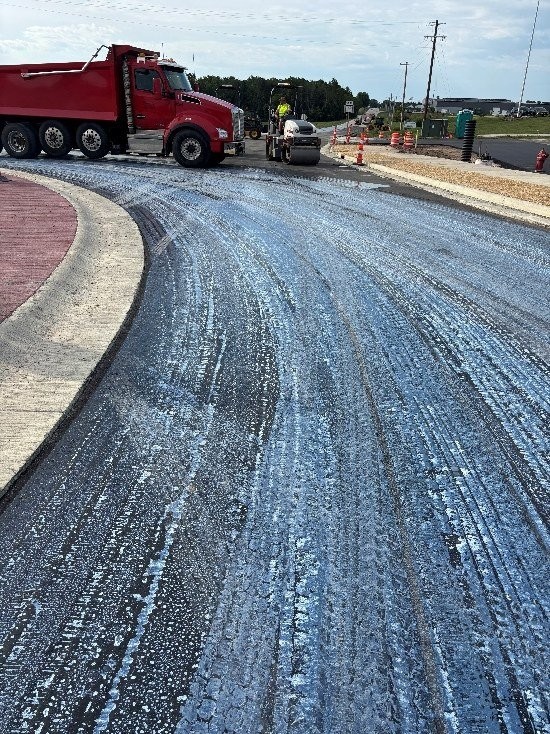
The east leg was finished by 6:50 a.m., followed by the northbound lane of the south leg. The southbound lane of the south leg stayed open to traffic near the fire station.
The first rate check, taken on a straight pull of one leg, measured 0.167 gal/SY. Coverage was good, so the rate was left as is.
Paving
Paving began on the interior of the roundabout at 9:00 a.m. Mix came off the trucks at 245 to 260°F. The county was paving with Warm Mix Asphalt, so these lower temperatures were expected and normal for its process. No pickup was observed anywhere in the roundabout, with haul trucks and the paver running on dried ATS.
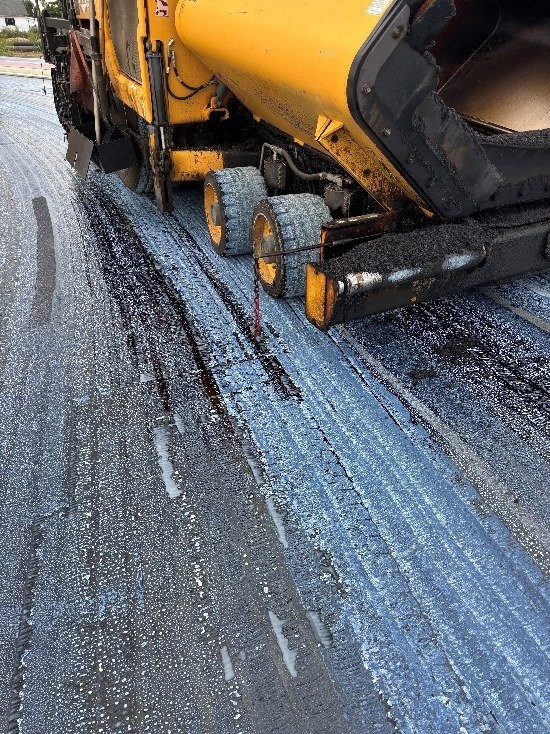
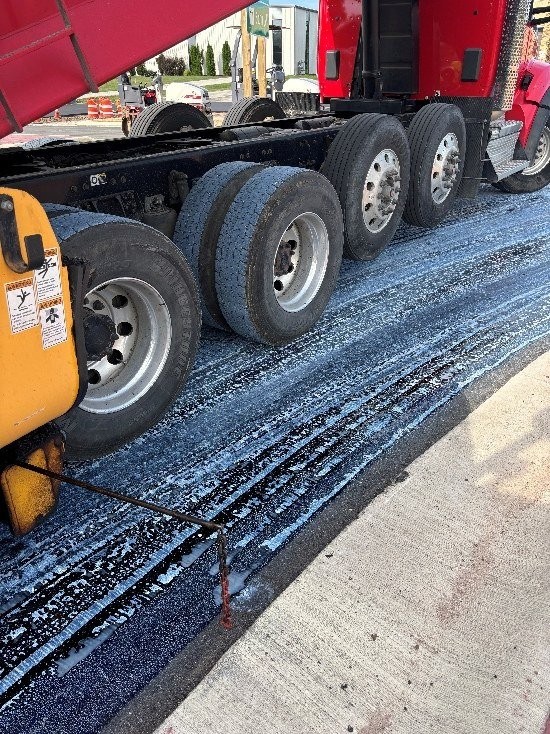
Crews tracked pavement temperatures through the day. The ATS film ran 3 to 5°F cooler than bare PMAB because of the lighter color. Temperatures increased from 90°F in the morning to just over 100°F by afternoon, with the ATS-treated sections remaining slightly cooler at each measurement.
Paving continued while Evergreen waited on a tanker of PMAB to finish the remaining area. By 2:20 p.m., the paving crew had moved to the southbound lane of the south leg.
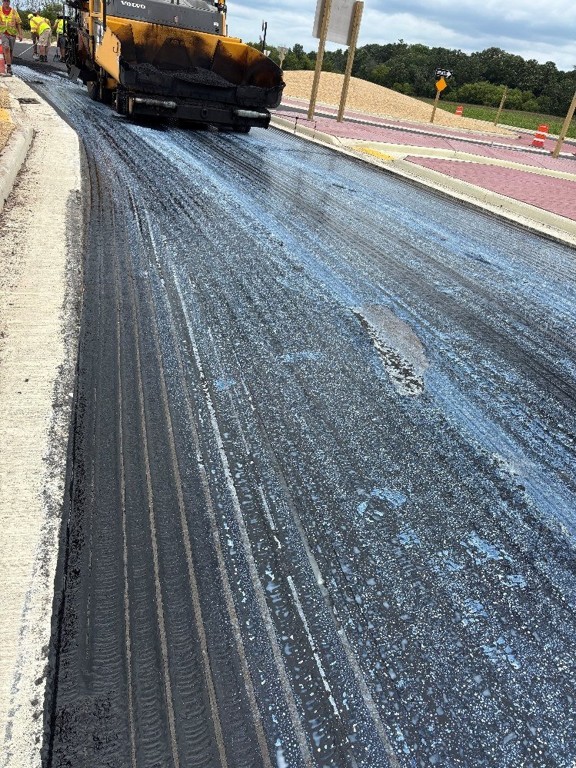
PMAB application continued past 3:00 p.m. A heavy downpour hit that evening. Over the following days the surface was still white, showing the ATS had not washed off. Paving resumed on the dried ATS on Wednesday and Thursday with no pickup and no reported friction concerns. The roundabout and adjacent highways stayed closed to through traffic during paving, about 3 days total.
The roundabout and its approach legs will be monitored over time for shoving, slippage and cracking at the surface interface
Best Practices for Using PMAB
Based on this project and PMAB work in Indiana, Illinois and Ohio, these practices help agencies and contractors get the most from PMAB:
- Project selection: Target high-shear locations such as roundabouts, busy intersections, and steep grades or stop approaches carrying heavy trucks. PMAB can also be considered for overlays and interstate pavements where reducing reflective cracking is a goal.
- Application rate: 0.125 to 0.20 gal/SY for bonding; 0.20 to 0.30 gal/SY where reflective cracking is also a concern. Sheboygan County targeted 0.15 gal/SY.
- Use of ATS: Apply 0.07 to 0.13 gal/SY, starting the spray before any tires touch the PMAB. ATS matters most on warm days and milled surfaces.
- Checking rates: Check the PMAB rate once per mile per day, or once on projects under a mile, by weighing a pan or paper placed in the spray path against the target ±10%. Check the ATS rate at the same frequency by pan, pad or distributor calibration.
- Paving: Consider keeping paving equipment water systems on, raise the paver end plates above the tack film, and include the PMAB rate in the HMA density calibration.
When to Consider a PMAB Tack Coat System
Roundabouts are particularly subjected to heavy turning movements and braking forces, but other high-stress pavement environments stand to benefit from strong interlayer bonding to ensure long-term performance too. Hot-applied PMAB tack coat systems can provide extra strength between asphalt lifts where bond-related distress is a key consideration. Agencies, consultants and contractors evaluating roundabouts, intersections, bridges and similar cases may benefit from considering PMAB technology in construction plans.
While the AMI specification guideline and construction checklist for T-Bond PMAB is available on request, our team is available to discuss considerations and help determine whether a PMAB tack coat system may be right for your next project.
Reach out to our team to learn more about AMIBOND T-Bond System and find out if it could be a fit for your next project.
AMIBOND™ and T-Bond® are trademarks of Asphalt Materials, Inc.